

Label Guide: Odeon
Odeon Records was a record label founded in 1903 by Max Straus and Heinrich Zuntz of the International Talking Machine Company in Berlin, Germany. It was named after a famous theatre in Paris, whose classical dome appears on the Odeon record label.
In 1904 Odeon launched the first double-sided gramophone record. The Berlin Odeon plant recorded, processed and exported records to many countries. There were extensive national catalogs for some of these countries: Greece, Scandinavian countries, India, all of Arabia, Netherlands, Estonia, Portugal, South and Central America, Rumania, Turkey, Hungary, China, Dutch East Indies, Siam, the Balkan countries etc. In the 1920s and 1930s about 70% of the German Odeon production was exported.
After World War II the Odeon label survived as an EMI subsidiary in many non-Anglophone markets like West Germany, Japan, Spain, Scandinavia, Latin America, and France. The Odeon Dome logo was kept alive in most of these markets, but they all usually had their very own label design.
This guide is focused on German and French Odeon labels, but due to the huge number of label variations, not just in Germany and France but also internationally, we won't even attempt to compile a complete label guide for Odeon. Instead we present you an Odeon guide for Germany and France, beginning with the Beat era in the early 1960s, and additionally a number of label samples from all over the world.
-
78rpm German Label Variation
 78rpm German Odeon label (1930s)
An example of the German 78rpm Odeon labels.
78rpm German Odeon label (1930s)
An example of the German 78rpm Odeon labels.
-
78rpm German Label Variation
 78rpm German Odeon label (1950s)
An example of the German 78rpm Odeon labels.
78rpm German Odeon label (1950s)
An example of the German 78rpm Odeon labels.
-
1. German Label Variation
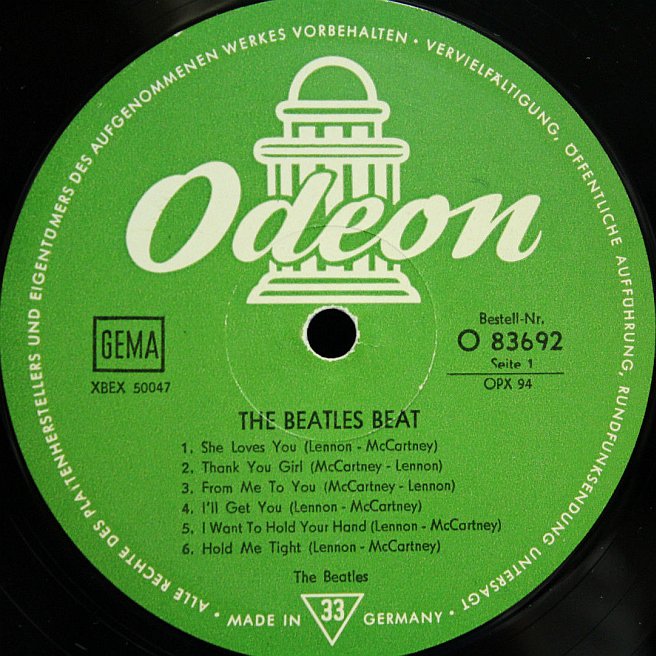 first German Odeon label (early to mid 1960s)
The German green Odeon label was used for mono pressings in the 1960s.
first German Odeon label (early to mid 1960s)
The German green Odeon label was used for mono pressings in the 1960s.
-
2. German Label Variation
 second German Odeon label (early 1960s - 1966)
This first version of the German stereo white and gold Odeon label was in print until 1966. It can be identified by the original rights statement printed along the rim beginning with 'ALLE RECHTE DES PLATTENHERSTELLERS'.
second German Odeon label (early 1960s - 1966)
This first version of the German stereo white and gold Odeon label was in print until 1966. It can be identified by the original rights statement printed along the rim beginning with 'ALLE RECHTE DES PLATTENHERSTELLERS'.
-
German Special Edition
 Special Edition Odeon label (1965)
This is a German pressing for the Ex-Libris record club in Switzerland.
Special Edition Odeon label (1965)
This is a German pressing for the Ex-Libris record club in Switzerland.
-
3. German Label Variation
 third German Odeon label (1966 - 1969)
The second version of the German stereo white and gold Odeon label was in print until 1969. The rights statement was changed to begin with 'URHEBER- UND LEISTUNGSSCHUTZRECHTE'.
third German Odeon label (1966 - 1969)
The second version of the German stereo white and gold Odeon label was in print until 1969. The rights statement was changed to begin with 'URHEBER- UND LEISTUNGSSCHUTZRECHTE'.
-
4. German Label Variation
 fourth German Odeon label (1970 - 1977)
The German blue EMI/Odeon label was used in the 1970s. This first version has no Label Code (LC) present on the label.
fourth German Odeon label (1970 - 1977)
The German blue EMI/Odeon label was used in the 1970s. This first version has no Label Code (LC) present on the label.
-
5. German Label Variation
 fifth German Odeon label (1977 - )
The Label Code (LC) was introduced in 1977 by the IFPI (International Federation of Phonogram and Videogram Industries) in order to unmistakably identify the different record labels for rights purposes. Records with such an LC number printed on the label were manufactured in 1977 or later.
fifth German Odeon label (1977 - )
The Label Code (LC) was introduced in 1977 by the IFPI (International Federation of Phonogram and Videogram Industries) in order to unmistakably identify the different record labels for rights purposes. Records with such an LC number printed on the label were manufactured in 1977 or later.
-
6. German Label Variation
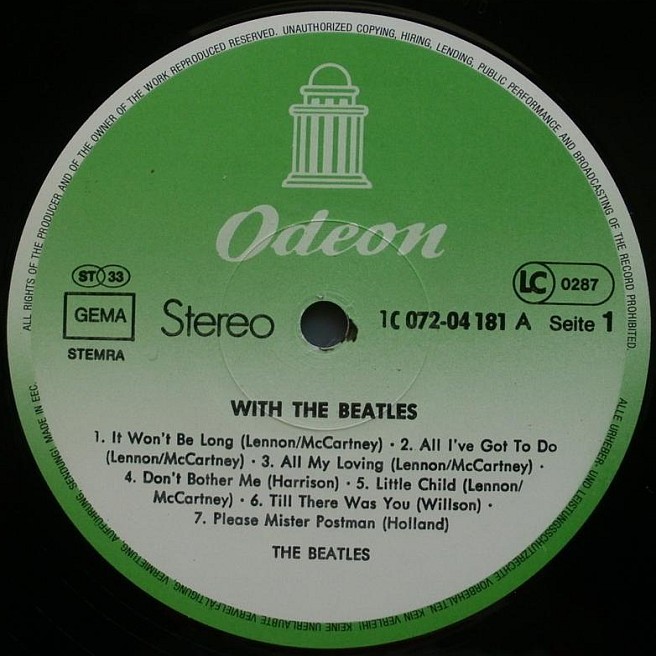 sixth German Odeon label (1980s)
In the 1980s the German EMI/Odeon label changed to this green design.
sixth German Odeon label (1980s)
In the 1980s the German EMI/Odeon label changed to this green design.
-
7. German Label Variation
 seventh German Odeon label (1980s)
Another version of the German 80's label, here from 1983.
seventh German Odeon label (1980s)
Another version of the German 80's label, here from 1983.
-
1. French Label Variation
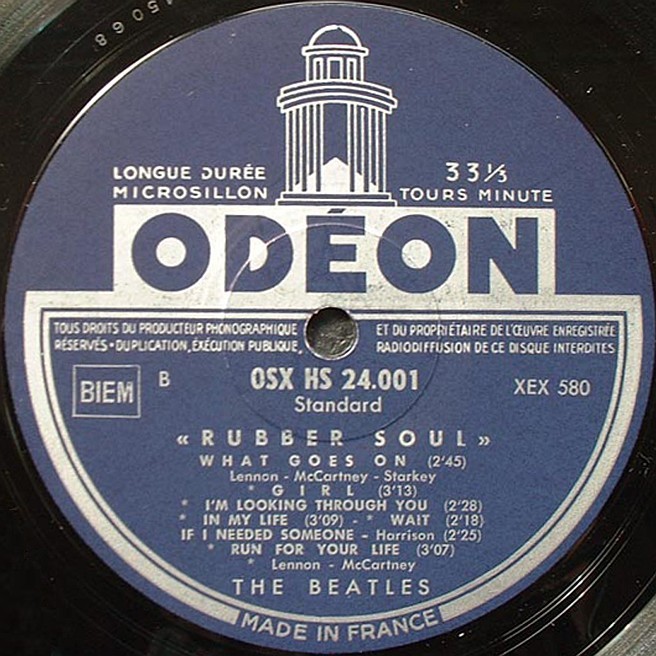 first French Odeon label (early to mid 1960s)
The French blue Odeon label was used until approximately 1965.
first French Odeon label (early to mid 1960s)
The French blue Odeon label was used until approximately 1965.
-
2. French Label Variation (I)
 second French Odeon label (mid 1960s)
The French orange Odeon label was used until 1966.
second French Odeon label (mid 1960s)
The French orange Odeon label was used until 1966.
-
2. French Label Variation (II)
 second French Odeon label (mid 1960s)
A variation of the orange (here more yellow) label.
second French Odeon label (mid 1960s)
A variation of the orange (here more yellow) label.
-
3. French Label Variation
 third French Odeon label (1966 - )
The French red Odeon label was introduced in 1966.
third French Odeon label (1966 - )
The French red Odeon label was introduced in 1966.
-
4. French Label Variation
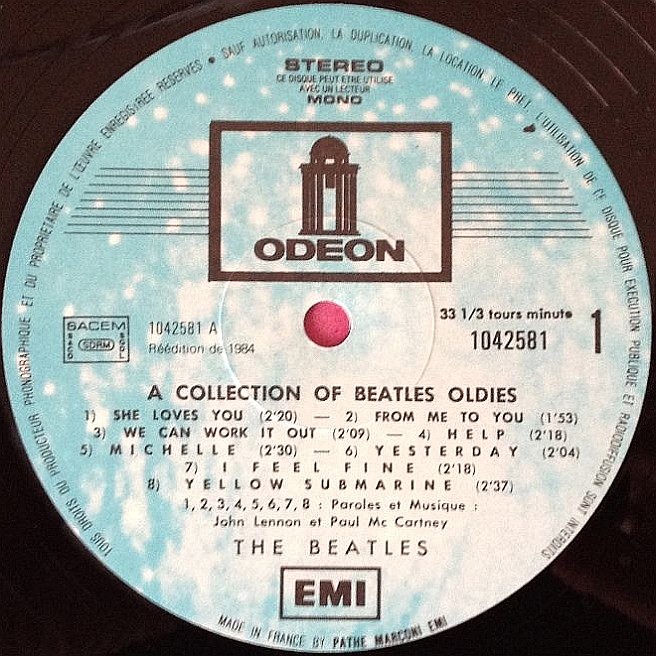 fourth French Odeon label (1969 - )
The French blue EMI/Odeon label was introduced in the late 1960s.
fourth French Odeon label (1969 - )
The French blue EMI/Odeon label was introduced in the late 1960s.
Please note: there were more French variations of the Odeon label than what is shown here in this guide. -
1. Spanish Label Variation
 first Spanish Odeon label (early to mid 1960s)
The Spanish blue Odeon label was used until approximately 1969 with several variations in style (also larger 'Odeon' print) and colour (also red). There is no EMI logo on these label variations.
first Spanish Odeon label (early to mid 1960s)
The Spanish blue Odeon label was used until approximately 1969 with several variations in style (also larger 'Odeon' print) and colour (also red). There is no EMI logo on these label variations.
-
2. Spanish Label Variation (I)
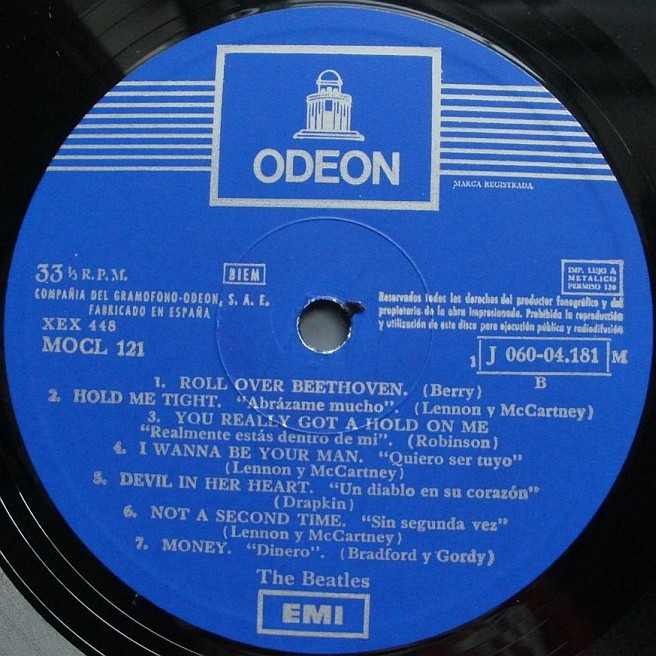 second Spanish Odeon label (1969 - )
The Spanish EMI/Odeon label was introduced in the late 1960s.
second Spanish Odeon label (1969 - )
The Spanish EMI/Odeon label was introduced in the late 1960s.
-
2. Spanish Label Variation (II)
 second Spanish Odeon label (1970 - )
-
1. Brazilian Label Variation
 first Brazilian Odeon label (1960s)
An example of a 1960s Odeon label from Brazil.
first Brazilian Odeon label (1960s)
An example of a 1960s Odeon label from Brazil.
-
2. Brazilian Label Variation
 second Brazilian Odeon label (1960s)
An example of a 1960s Odeon label from Brazil.
second Brazilian Odeon label (1960s)
An example of a 1960s Odeon label from Brazil.
-
1. Chilean Label Variation
 Chilean Odeon label (1960s)
An example of a 1960s Odeon label from Chile.
Chilean Odeon label (1960s)
An example of a 1960s Odeon label from Chile.
-
2. Chilean Label Variation
 Chilean Odeon label (1960s)
An example of a 1960s Odeon label from Chile.
Chilean Odeon label (1960s)
An example of a 1960s Odeon label from Chile.
-
1. Uruguay Label Variation
 first Uruguay Odeon label (1960s)
An example of a 1960s Odeon label from Uruguay.
first Uruguay Odeon label (1960s)
An example of a 1960s Odeon label from Uruguay.
-
2. Uruguay Label Variation
 second Uruguay Odeon label (1960s)
A second example of a 1960s Odeon label from Uruguay.
second Uruguay Odeon label (1960s)
A second example of a 1960s Odeon label from Uruguay.
-
1. Venezuela Label Variation
 first Venezuela Odeon label (1960s)
An example of a 1960s Odeon label from Venezuela.
first Venezuela Odeon label (1960s)
An example of a 1960s Odeon label from Venezuela.
-
2. Venezuela Label Variation
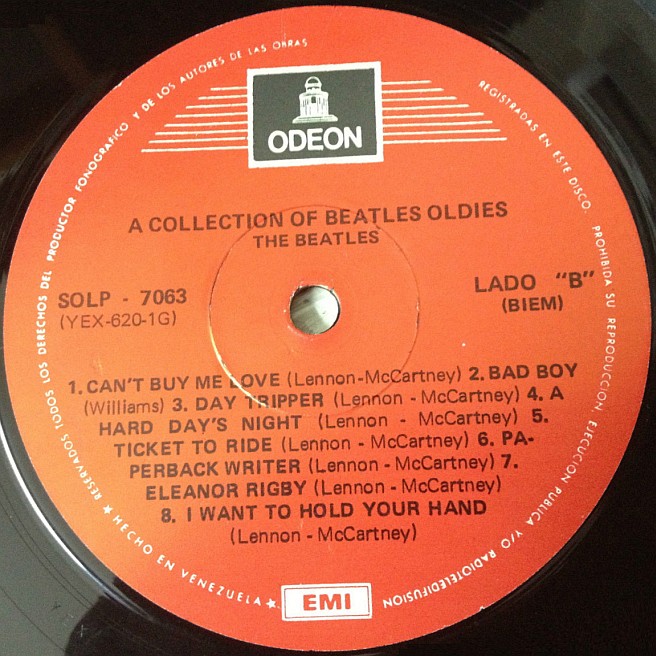 second Venezuela Odeon label (1970s)
An example of a 1970s EMI/Odeon label from Venezuela.
second Venezuela Odeon label (1970s)
An example of a 1970s EMI/Odeon label from Venezuela.
-
UK Label Variation
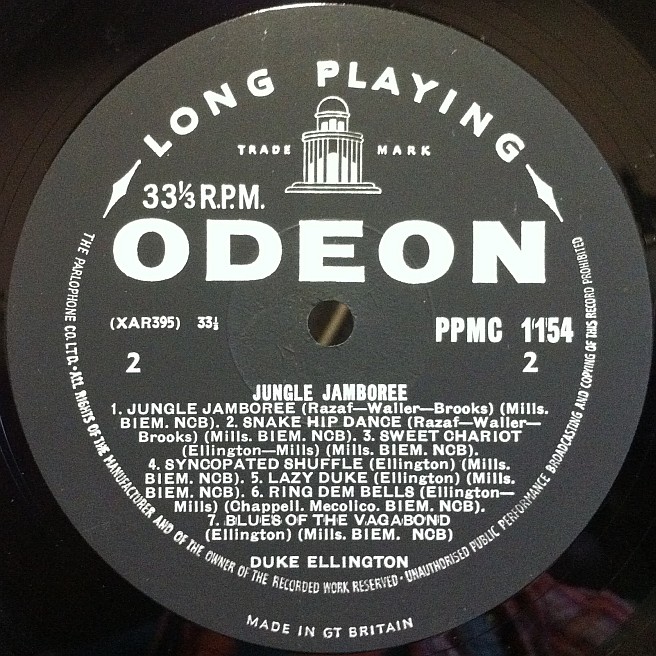 UK Odeon label (1961)
An example of a 1960s Odeon label from the United Kingdom.
UK Odeon label (1961)
An example of a 1960s Odeon label from the United Kingdom.
-
Indian Label Variation
 Indian Odeon label (1960s)
An example of a 1960s Odeon label from India.
Indian Odeon label (1960s)
An example of a 1960s Odeon label from India.
-
Dutch Label Variation
 Dutch Odeon label (1960s)
An example of a 1960s Odeon label from the Netherlands.
Dutch Odeon label (1960s)
An example of a 1960s Odeon label from the Netherlands.
-
Peruvian Label Variation
 Peruvian Odeon label (1960s)
An example of a 1960s Odeon label from Peru.
Peruvian Odeon label (1960s)
An example of a 1960s Odeon label from Peru.
-
Danish Label Variation
 Danish Odeon label (1960s)
An example of a 1960s Odeon label from Denmark.
Danish Odeon label (1960s)
An example of a 1960s Odeon label from Denmark.
-
Greek Label Variation
 Greek Odeon label (1960s)
An example of a 1960s Odeon label from Greece.
Greek Odeon label (1960s)
An example of a 1960s Odeon label from Greece.