


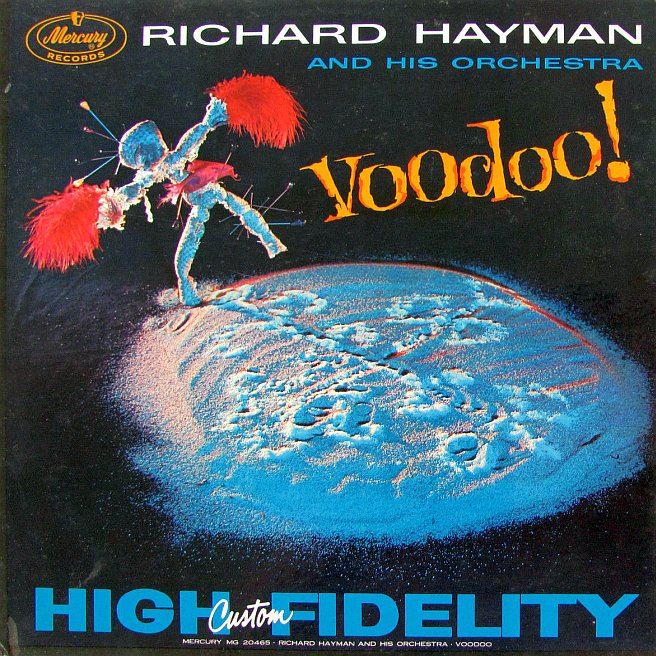


Label Guide: Mercury
Mercury Record Corporation was formed in Chicago in 1945 by Irving Green, Berle Adams and Arthur Talmadge. Under their own label, Mercury released a variety of recording styles from classical music to psychedelic rock. However, its subsidiaries focused on their own specialized categories of music.
In 1962 Mercury was sold to Consolidated Electronics Industries Corp. (a.k.a. Conelco) which is an affiliate of Philips, and in 1963, Mercury switched British distribution from EMI to Philips. Conelco became North American Philips Corporation in 1969, which was then merged with several other labels to become PolyGram in 1972.
In 1981, Mercury, along with other U.S. PolyGram-owned labels, which included Polydor, RSO Records, and Casablanca, consolidated under the new name PolyGram Records Inc. Around this time, Mercury moved its headquarters to New York City. In late 1998, PolyGram was bought by Seagram, which then absorbed the company into its Universal Music Group unit.
-
1. Label Variation
 first Mercury label (1949 - late 1950s)
The first US Mercury label design that was used from 1949 until the late 1950s. The 'winged head of Mercury' logo sits at the bottom centre of the label There are very many variations of this label, in color, print color, text and regarding the various Mercury release series. The earliest albums use a gold tone as printing colour, which changed to silver around 1955.
first Mercury label (1949 - late 1950s)
The first US Mercury label design that was used from 1949 until the late 1950s. The 'winged head of Mercury' logo sits at the bottom centre of the label There are very many variations of this label, in color, print color, text and regarding the various Mercury release series. The earliest albums use a gold tone as printing colour, which changed to silver around 1955.
-
2. Label Variation
 second Mercury label (ca. 1958 - 1963)
For the second US label a new oval-shaped Mercury logo was introduced. The logo sits on a black or blue background. As with the previous design this label comes in many variations.
second Mercury label (ca. 1958 - 1963)
For the second US label a new oval-shaped Mercury logo was introduced. The logo sits on a black or blue background. As with the previous design this label comes in many variations.
-
3. Label Variation (I)
third Mercury label (1963 - 1969)
The mid-1960s Mercury label went through a drastic re-design which saw the reappearance of the 'winged head of Mercury' logo on a red or orange-red background. This label comes in several variations, most notably that the early versions use entirely black print where later on the logo frame and 'MERCURY' text were printed in white.
-
3. Label Variation (II)
 third Mercury label (1963 - 1969)
The mid-1960s Mercury label went through a drastic re-design which saw the reappearance of the 'winged head of Mercury' logo on a red or orange-red background. This label comes in several variations, most notably that the early versions use entirely black print where later on the logo frame and 'MERCURY' text were printed in white.
third Mercury label (1963 - 1969)
The mid-1960s Mercury label went through a drastic re-design which saw the reappearance of the 'winged head of Mercury' logo on a red or orange-red background. This label comes in several variations, most notably that the early versions use entirely black print where later on the logo frame and 'MERCURY' text were printed in white.
-
4. Label Variation
 fourth Mercury label (1969 - 1972)
The mid-1960s Mercury label went through a drastic re-design which saw the reappearance of the 'winged head of Mercury' logo on a red or orange-red background. This label comes in several variations, most notably that the early versions use entirely black print where later on the logo frame and 'MERCURY' text were printed in white.
fourth Mercury label (1969 - 1972)
The mid-1960s Mercury label went through a drastic re-design which saw the reappearance of the 'winged head of Mercury' logo on a red or orange-red background. This label comes in several variations, most notably that the early versions use entirely black print where later on the logo frame and 'MERCURY' text were printed in white.
-
5. Label Variation
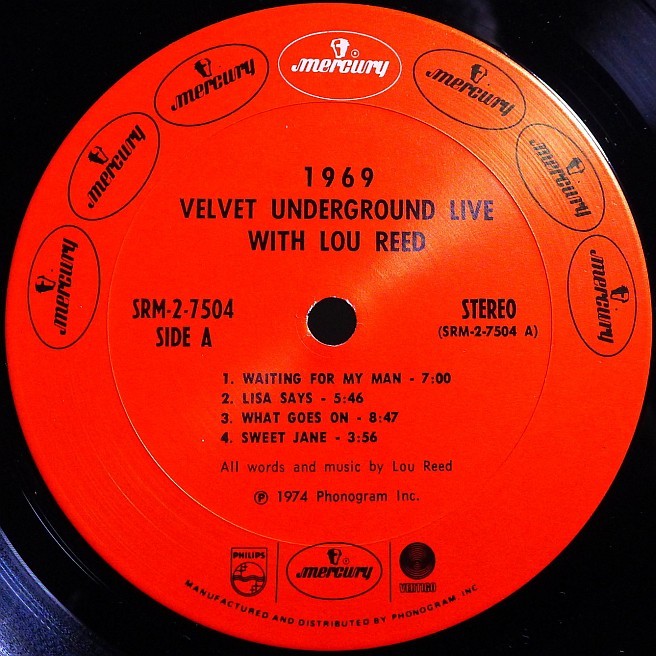 fifth Mercury label (1972 - 1974)
In late 1972, after PolyGram acquired Mercury from Philips, the label changed again to include a 'Phonogram Inc.' copyright. There are two main versions of this fifth label, one that is largely unchanged from the previous design and features 12 Mercury logos around the rim, and a new one with just seven Mercury logos and a reference (with logos) of other PolyGram labels at the bottom centre.
fifth Mercury label (1972 - 1974)
In late 1972, after PolyGram acquired Mercury from Philips, the label changed again to include a 'Phonogram Inc.' copyright. There are two main versions of this fifth label, one that is largely unchanged from the previous design and features 12 Mercury logos around the rim, and a new one with just seven Mercury logos and a reference (with logos) of other PolyGram labels at the bottom centre.
-
6. Label Variation
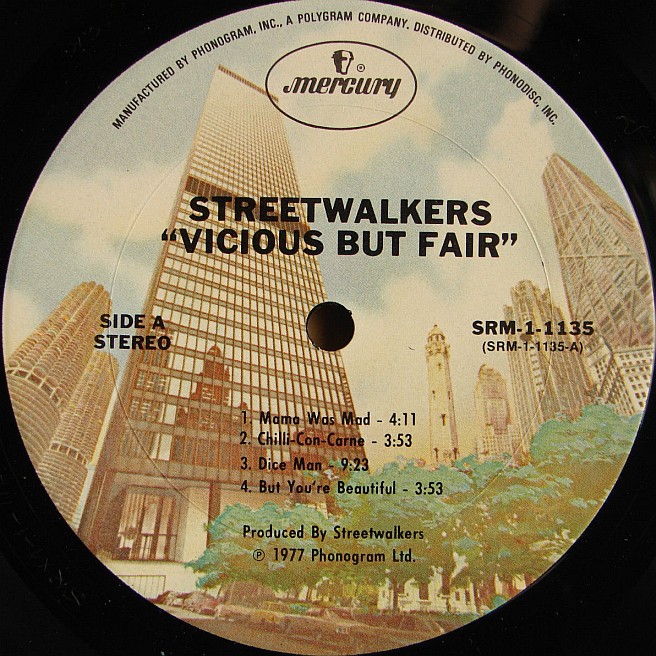 sixth Mercury label (1974 -1983)
From late 1974 to early 1983, the label design featured a painting of three famous Chicago buildings (a.k.a. the 'Skyscraper label'): Marina City, John Hancock Center and One IBM Plaza which was Mercury headquarters during that period, having moved from its long-time address at 35 East Wacker Drive in Chicago.
sixth Mercury label (1974 -1983)
From late 1974 to early 1983, the label design featured a painting of three famous Chicago buildings (a.k.a. the 'Skyscraper label'): Marina City, John Hancock Center and One IBM Plaza which was Mercury headquarters during that period, having moved from its long-time address at 35 East Wacker Drive in Chicago.
-
7. Label Variation
 seventh Mercury label (mid 1980s)
This is the 1980s label with the neon lights Mercury logo.
seventh Mercury label (mid 1980s)
This is the 1980s label with the neon lights Mercury logo.
-
US Custom Label (I)
 custom Mercury label (1968)
Example of an American custom label design, here: The Fool.
custom Mercury label (1968)
Example of an American custom label design, here: The Fool.
-
US Custom Label (II)
 custom Mercury label (1973)
Another Example of an American custom label design, here: New York Dolls.
custom Mercury label (1973)
Another Example of an American custom label design, here: New York Dolls.
-
78rpm Label Variation (I)
 78rpm USA Mercury label (1950s)
-
78rpm Label Variation (II)
 78rpm USA Mercury label (1950s)
-
78rpm Label Variation (III)
 78rpm UK Mercury label (1950s)
-
78rpm Label Variation (IV)
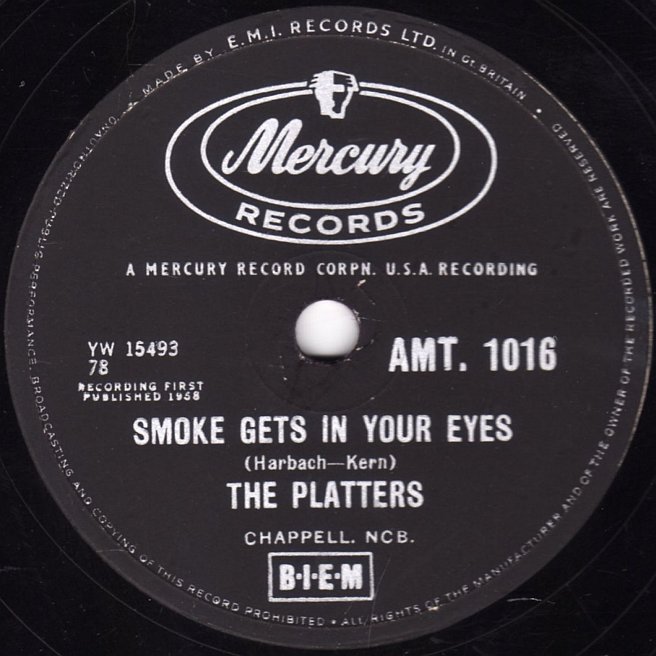 78rpm UK Mercury label (1950s)
-
78rpm Label Variation (V)
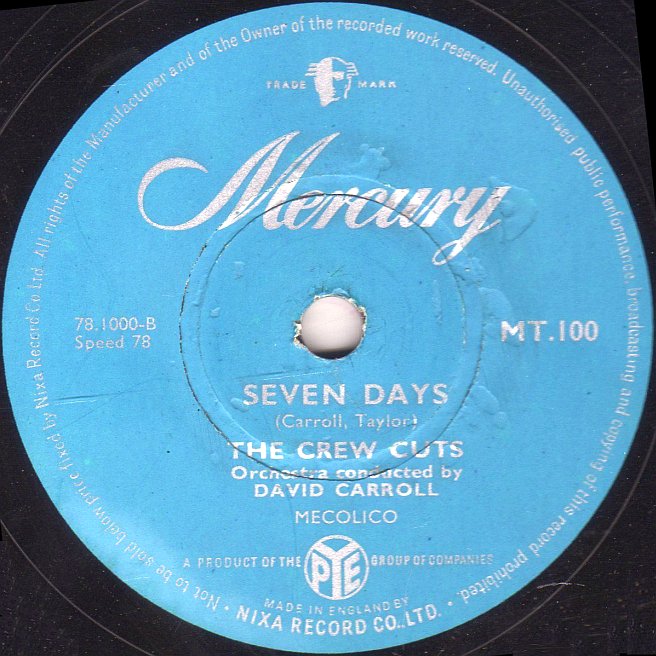 78rpm UK Mercury label (1950s)
-
1. UK Label Variation
 first UK Mercury label (1950s)
-
2. UK Label Variation
 second UK Mercury label (1959)
-
3. UK Label Variation
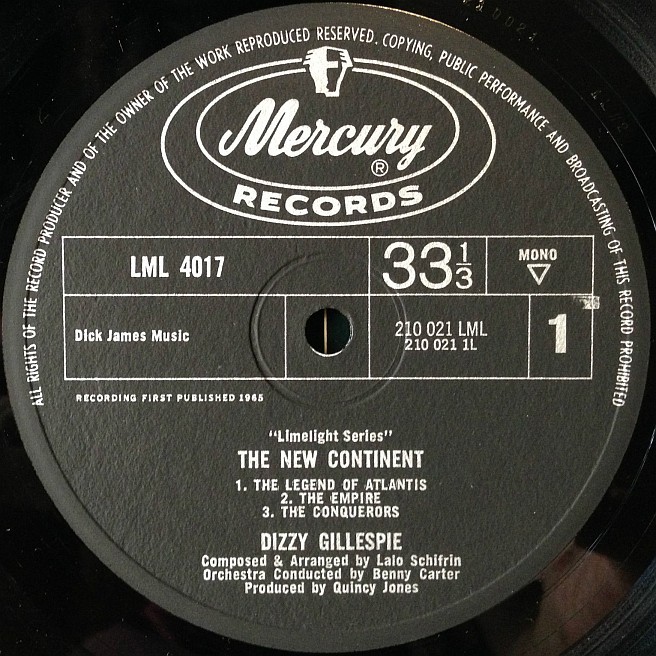 third UK Mercury label (1965)
-
4. UK Label Variation
 fourth UK Mercury label (1970)
-
5. UK Label Variation
 fifth UK Mercury label, Rod Stewart (1974)
-
6. UK Label Variation
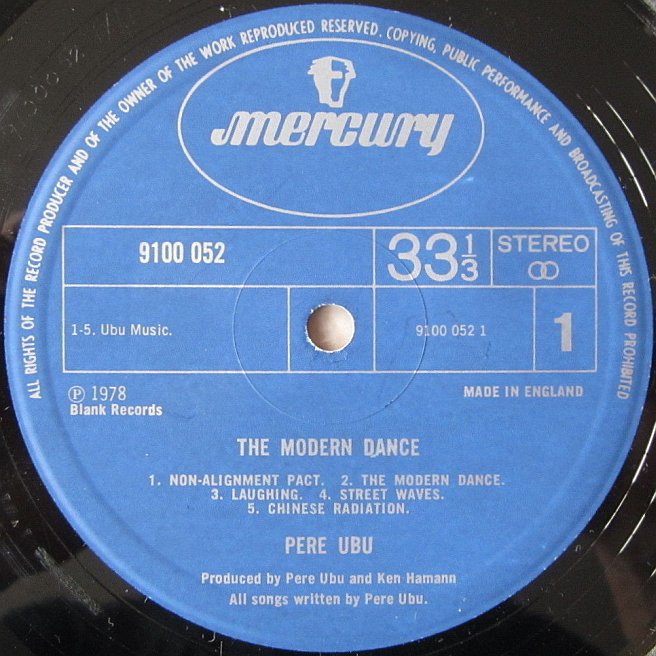 sixth UK Mercury label (1978)
-
Australian Label Variation
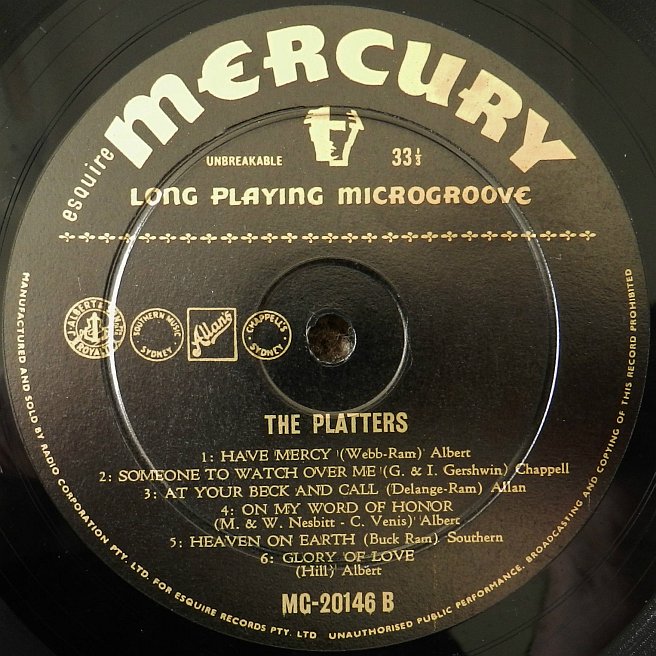 Australian Mercury label (1955)