



Label Guide: Decca
Decca Records began as a British record label established in 1929 by Edward Lewis. The name "Decca" dates back to a portable gramophone called the "Decca Dulcephone" patented in 1914 by musical instrument makers Barnett Samuel and Sons. Within years, Decca Records Ltd. was the second largest record label in the world, calling itself "The Supreme Record Company".
In late 1934, a U.S. branch of Decca was launched, which became a major player in the depressed American record market thanks to its roster of popular artists, particularly Bing Crosby, and the decision to price Decca at 35 cents. In 1942, American Decca released the first recording of "White Christmas" by Bing Crosby, which remains the best-selling single worldwide of all time until today.
After World War II the ties between British and American Decca were broken for several decades. American Decca bought Universal-International in 1952, and eventually merged with MCA in 1962, becoming a subsidiary company under MCA. The Decca name was dropped by MCA in America in 1973 in favour of the MCA Records label.
Dissatisfied with American Decca's promotion of British Decca recordings and because American Decca held the rights to the name Decca in the US and Canada, British Decca sold its records in the United States and Canada under the label London Records beginning in 1947. They retained a non-reciprocal right to license and issue American Decca recordings in the UK on their Brunswick and Coral labels. This arrangement continued through 1967 when a UK branch of MCA was established utilising the MCA Records label, with distribution fluctuating between British Decca and other English companies over time.
PolyGram acquired the remains of Decca UK within days of Sir Edward Lewis's death in January 1980. British Decca's pop catalogue was taken over by Polydor Records. After Universal Studios acquired PolyGram in 1998, the worldwide Decca label became part of Universal Music Group, which still owns and operates Decca Records today.
-
1. Label Variation (I)
 first Decca label, mono ( - Summer 1968)
The first unboxed Decca mono label has a red background and an inner groove, and was used approximately until summer of 1968. Original pressings earlier than 1965 have 'RECORDING FIRST PUBLISHED 196x' printed instead of 'Ⓟ 196x'.
first Decca label, mono ( - Summer 1968)
The first unboxed Decca mono label has a red background and an inner groove, and was used approximately until summer of 1968. Original pressings earlier than 1965 have 'RECORDING FIRST PUBLISHED 196x' printed instead of 'Ⓟ 196x'.
-
1. Label Variation (II)
first Decca label, mono ( - Summer 1968)
The first unboxed Decca mono label has a red background and an inner groove, and was used approximately until summer of 1968. Original pressings earlier than 1965 have 'RECORDING FIRST PUBLISHED 196x' printed instead of 'Ⓟ 196x'.
-
2. Label Variation
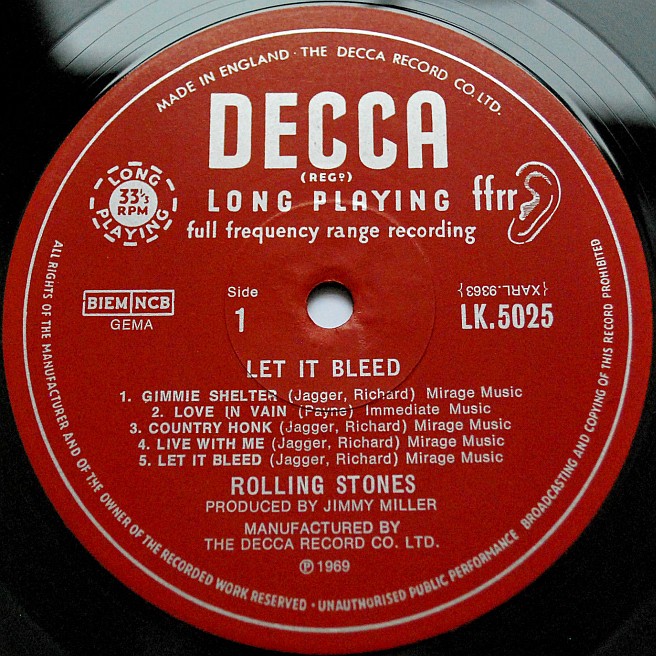 second Decca label, mono (Summer 1968 - late 1969)
The second unboxed Decca mono label is flat without the inner groove. It indicates pressings from Summer of 1968 until late 1969.
second Decca label, mono (Summer 1968 - late 1969)
The second unboxed Decca mono label is flat without the inner groove. It indicates pressings from Summer of 1968 until late 1969.
-
3. Label Variation
 first Decca label, stereo ( - Summer 1968)
The first unboxed Decca stereo label has a blue background and an inner groove, and was used approximately until summer of 1968. Original pressings earlier than 1965 have 'RECORDING FIRST PUBLISHED 196x' printed instead of 'Ⓟ 196x'.
first Decca label, stereo ( - Summer 1968)
The first unboxed Decca stereo label has a blue background and an inner groove, and was used approximately until summer of 1968. Original pressings earlier than 1965 have 'RECORDING FIRST PUBLISHED 196x' printed instead of 'Ⓟ 196x'.
-
4. Label Variation
 second Decca label, stereo (Summer 1968 - late 1969)
The second unboxed Decca stereo label is flat without the inner groove. It indicates pressings from summer of 1968 until late 1969.
second Decca label, stereo (Summer 1968 - late 1969)
The second unboxed Decca stereo label is flat without the inner groove. It indicates pressings from summer of 1968 until late 1969.
-
5. Label Variation
 Decca TXL-Series label (1965 - 1968)
A light blue, unboxed Decca label was used for the early releases in the TXL-Series, which were mono pressings. Pre-1968 orginal pressings have the inner groove.
Decca TXL-Series label (1965 - 1968)
A light blue, unboxed Decca label was used for the early releases in the TXL-Series, which were mono pressings. Pre-1968 orginal pressings have the inner groove.
-
6. Label Variation
 Decca TXS-Series label (1965 - 1969)
A green, unboxed Decca label was used for the early releases in the TXS-Series, which were stereo pressings. Pre-1968 orginal pressings have the inner groove.
Decca TXS-Series label (1965 - 1969)
A green, unboxed Decca label was used for the early releases in the TXS-Series, which were stereo pressings. Pre-1968 orginal pressings have the inner groove.
-
7. Label Variation
 fifth Decca label, mono (1969 - )
In late 1969, Decca changed its logo on the labels to a boxed version. Red background indicates mono pressings.
fifth Decca label, mono (1969 - )
In late 1969, Decca changed its logo on the labels to a boxed version. Red background indicates mono pressings.
-
8. Label Variation
 fifth Decca label, stereo (1969 - )
In late 1969, Decca changed its logo on the labels to a boxed version. Blue background indicates stereo pressings.
fifth Decca label, stereo (1969 - )
In late 1969, Decca changed its logo on the labels to a boxed version. Blue background indicates stereo pressings.
-
8. Label Variation (II)
 fifth Decca label, stereo (1969 - )
There is also a yellow version of this label design.
fifth Decca label, stereo (1969 - )
There is also a yellow version of this label design.
-
8. Label Variation (III)
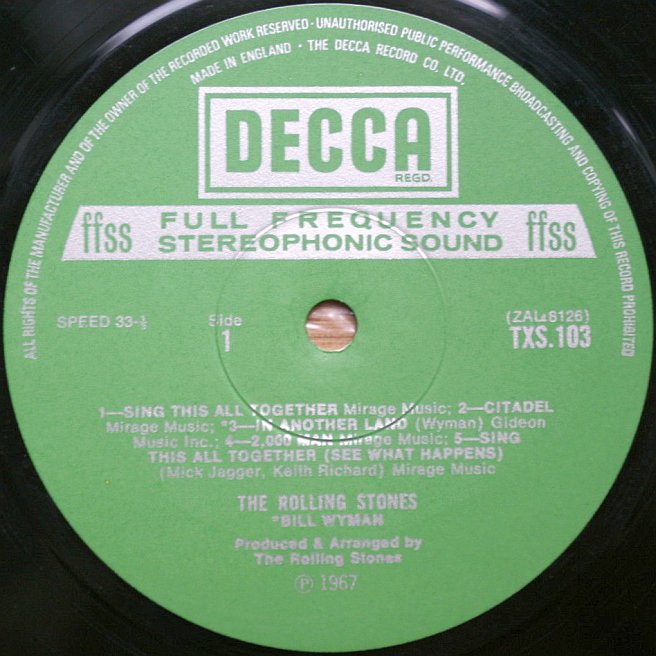 fifth Decca label, stereo (1969 - )
And a green version of this label design.
fifth Decca label, stereo (1969 - )
And a green version of this label design.
-
Phase 4 Label Variation
 Phase 4 Decca label (1969)
The Phase 4 Stereo label, here from 1969.
Phase 4 Decca label (1969)
The Phase 4 Stereo label, here from 1969.
-
1970s Label Variation (UK)
 1970s UK Decca label
Several 1970s UK Decca labels, there are probably many more.
1970s UK Decca label
Several 1970s UK Decca labels, there are probably many more.
-
1970s Label Variation (UK)
 1970s UK Decca label
Several 1970s UK Decca labels, there are probably many more.
1970s UK Decca label
Several 1970s UK Decca labels, there are probably many more.
-
1970s Label Variation (UK)
 1970s UK Decca label
Several 1970s UK Decca labels, there are probably many more.
1970s UK Decca label
Several 1970s UK Decca labels, there are probably many more.
-
1970s Label Variation (UK)
 1970s UK Decca label
Several 1970s UK Decca labels, there are probably many more.
1970s UK Decca label
Several 1970s UK Decca labels, there are probably many more.
-
1980s Label Variation (UK)
 1980s UK Decca label
Several 1980s UK Decca labels, there are probably many more.
1980s UK Decca label
Several 1980s UK Decca labels, there are probably many more.
-
1980s Label Variation (UK)
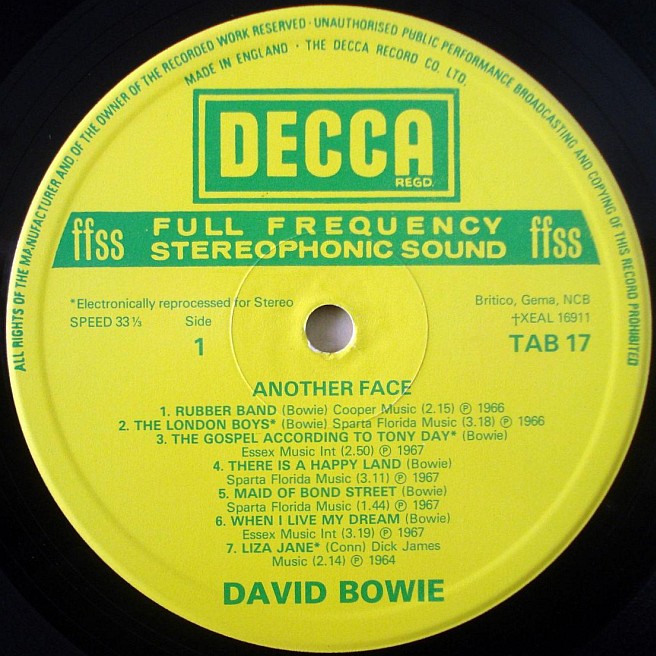 1980s UK Decca label
Several 1980s UK Decca labels, there are probably many more.
1980s UK Decca label
Several 1980s UK Decca labels, there are probably many more.
-
1980s Label Variation (UK)
 1980s UK Decca label
Several 1980s UK Decca labels, there are probably many more.
1980s UK Decca label
Several 1980s UK Decca labels, there are probably many more.
-
1. US Label Variation
 first US Decca label (1949 - 1954)
The first American Decca label has 'Long Play' written at the top left corner, and 'Microgroove UNBREAKABLE' at the bottom centre. It exists in several colours: black, maroon, and green.
first US Decca label (1949 - 1954)
The first American Decca label has 'Long Play' written at the top left corner, and 'Microgroove UNBREAKABLE' at the bottom centre. It exists in several colours: black, maroon, and green.
-
2. US Label Variation (I)
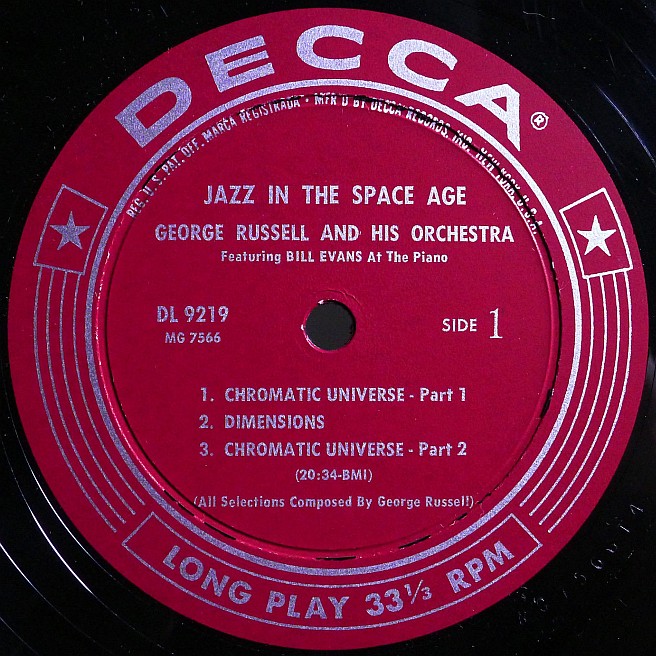 second US Decca label (1954 - 1960)
The second American Decca label has a wider DECCA logo enclosed by two stars and 'LONG PLAY 33 1/3 RPM' written at the bottom centre. It exists in black or maroon with several minor variations.
second US Decca label (1954 - 1960)
The second American Decca label has a wider DECCA logo enclosed by two stars and 'LONG PLAY 33 1/3 RPM' written at the bottom centre. It exists in black or maroon with several minor variations.
-
2. US Label Variation (II)
 second US Decca label (1954 - 1960)
The second American Decca label has a wider DECCA logo enclosed by two stars and 'LONG PLAY 33 1/3 RPM' written at the bottom centre. It exists in black or maroon with several minor variations.
second US Decca label (1954 - 1960)
The second American Decca label has a wider DECCA logo enclosed by two stars and 'LONG PLAY 33 1/3 RPM' written at the bottom centre. It exists in black or maroon with several minor variations.
-
3. US Label Variation
 third US Decca label (early 1960s)
The color band label was introduced around 1960. The first version has a deep groove and no reference to MCA Records, instead just 'Decca Records, Inc. New York'.
third US Decca label (early 1960s)
The color band label was introduced around 1960. The first version has a deep groove and no reference to MCA Records, instead just 'Decca Records, Inc. New York'.
-
4. US Label Variation
 fourth US Decca label (late 1960s)
The second version of the color band label notes that Decca is now 'A Division of MCA Inc. New York, U.S.A.'.
fourth US Decca label (late 1960s)
The second version of the color band label notes that Decca is now 'A Division of MCA Inc. New York, U.S.A.'.
-
5. US Label Variation
 fifth US Decca label (1971/1972)
The third version of the color band label notes that record is now 'manufactured by MCA Records Inc., Calif. U.S.A.'.
fifth US Decca label (1971/1972)
The third version of the color band label notes that record is now 'manufactured by MCA Records Inc., Calif. U.S.A.'.
-
6. US Label Variation
 sixth US Decca label (1972 - )
The sixth American Decca label was completely remodeled to this light blue with clouds design, including an entirely new Decca logo.
sixth US Decca label (1972 - )
The sixth American Decca label was completely remodeled to this light blue with clouds design, including an entirely new Decca logo.
-
7. US Label Variation
 seventh US Decca label (1970)
A special version of the American Decca label, unclear for exactly what kind of releases this was used.
seventh US Decca label (1970)
A special version of the American Decca label, unclear for exactly what kind of releases this was used.
-
1. German Label Variation
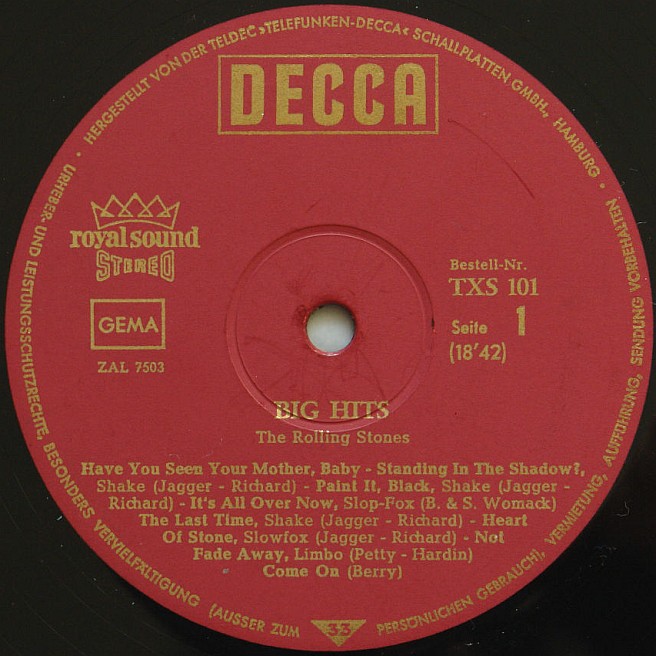 first German Decca label (mid 1960s)
This is the classic German 'wine red and gold' Decca label of the mid-1960s, featuring the 'Royal Sound Stereo' crown sign.
first German Decca label (mid 1960s)
This is the classic German 'wine red and gold' Decca label of the mid-1960s, featuring the 'Royal Sound Stereo' crown sign.
-
2. German Label Variation
 second German Decca label (late 1960s)
In the late 1960s the gold print was replaced with black and white on a 'standard red' background, still featuring the 'Royal Sound Stereo' crown sign.
second German Decca label (late 1960s)
In the late 1960s the gold print was replaced with black and white on a 'standard red' background, still featuring the 'Royal Sound Stereo' crown sign.
-
3. German Label Variation
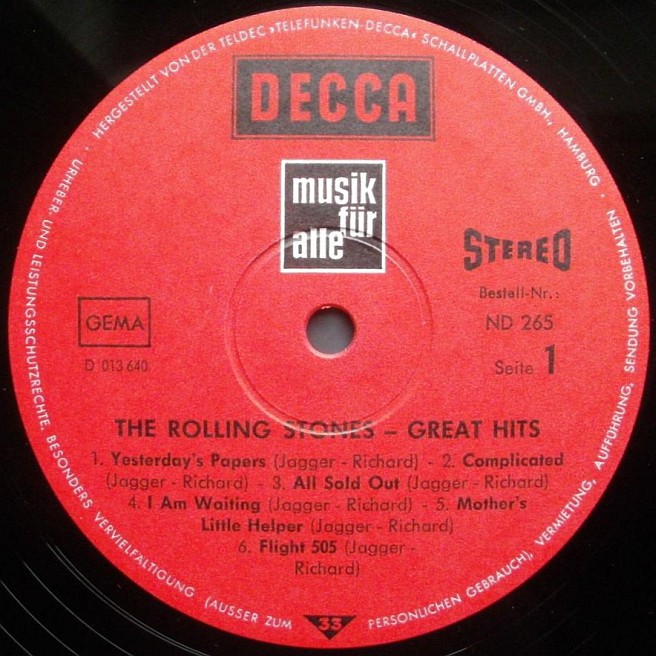 third German Decca label (early 1970s)
The standard German early-70s Decca label was 'standard red'. Shown here is a special version for the budget priced 'Musik für alle' series.
third German Decca label (early 1970s)
The standard German early-70s Decca label was 'standard red'. Shown here is a special version for the budget priced 'Musik für alle' series.
-
1. French Label Variation
 first French Decca label (late 1960s)
A label design from France 'Decca Disques' for the second half of the 1960's.
first French Decca label (late 1960s)
A label design from France 'Decca Disques' for the second half of the 1960's.
-
2. French Label Variation
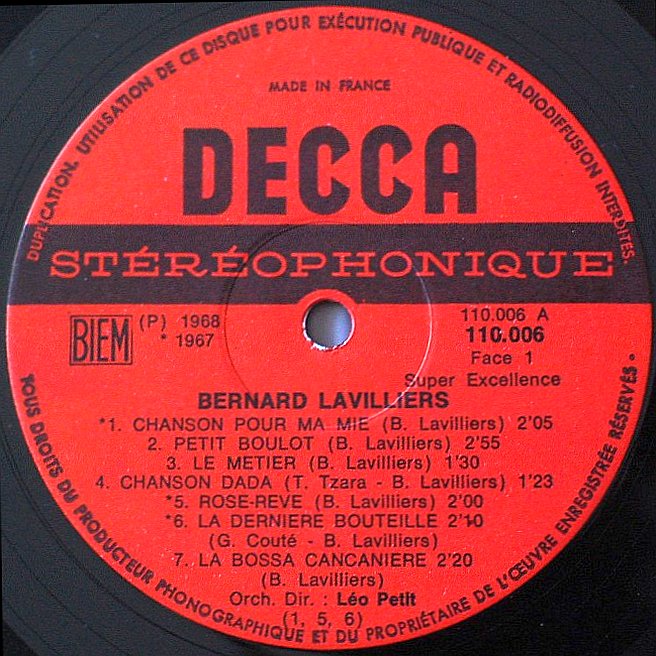 second French Decca label (late 1960s)
A label design from France 'Decca Stereophonique' for the second half of the 1960's.
second French Decca label (late 1960s)
A label design from France 'Decca Stereophonique' for the second half of the 1960's.